Every backdrop swap starts by deciding which pixels are you.
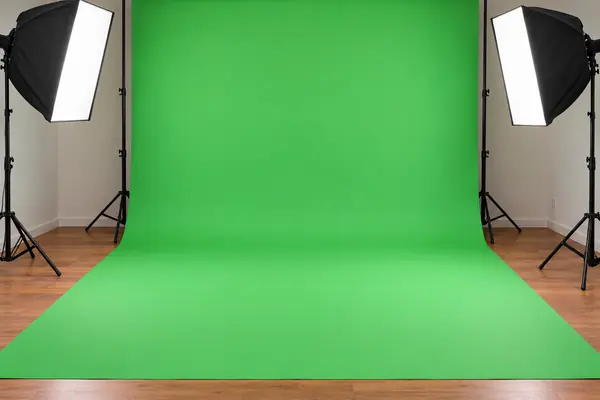
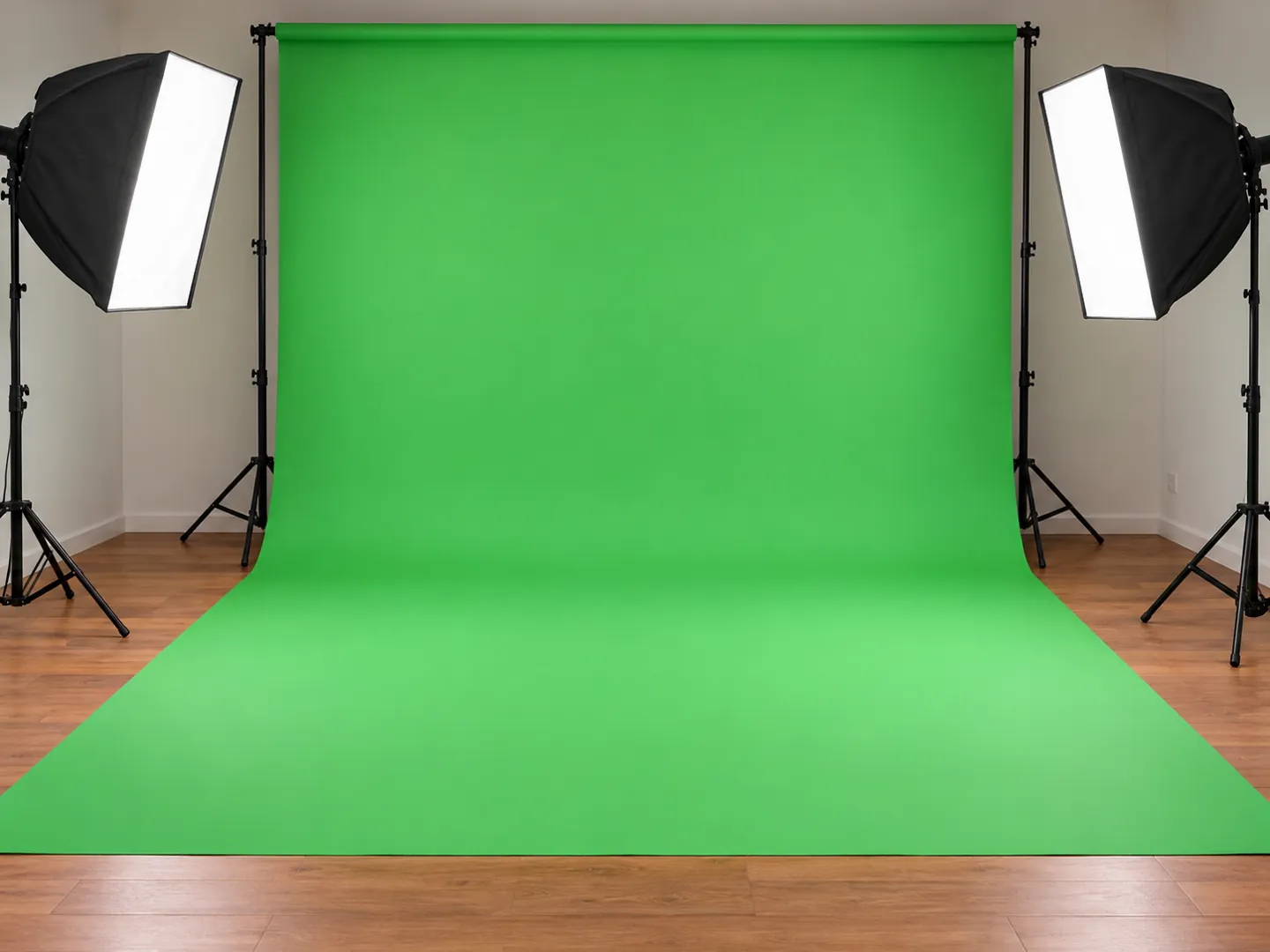
Old booths did it with a sheet of bright green. Newer ones use software trained on tens of thousands of cut-out photos. Both are making the same thing: a matte that says how much of each pixel belongs to the person in front.
Pick a situation to see how likely it is to leave a messy cutout. The bar shows how hard the scene makes the job.
Based on how chroma keying and image matting are described in the sources below. General information about how the technique works.
TWO NUMBERS WORTH KNOWING
Taught on photos, fast enough for video.
One figure on how matting models learn, one on how quickly a newer one runs.
49,300 images
Images in the Deep Image Matting training set
The 2017 Deep Image Matting paper built a large dataset of 49,300 training images and 1,000 test images to teach a network to predict alpha mattes.
TRAINING DATA · CVPR 2017
67 frames/s
Portrait matting, single photo, no green screen
MODNet, a trimap-free portrait matting network, ran at 67 frames per second on a 1080Ti graphics card, from a single input image.
SPEED · MODNET
Earlier matting networks needed a trimap, a rough hand-drawn map of sure foreground, sure background and unknown edge. Removing that step is what lets a booth cut people out automatically.
FOUR THINGS THAT HELP
Help the software see your outline.
Whether the booth uses a screen or a model, the same few habits make the edge easier to find.
Avoid the backing colour
On a green screen, skip green clothes and accessories; anything that colour can be keyed out with the background.
Stand away from the backdrop
Light reflected off a coloured screen tints the edges of the subject, known as spill. A bit of distance reduces it.
Keep the light even
Even lighting with no shadows on the backdrop keeps the colour range narrow, so the key is cleaner.
Give the AI a contrast
Matting models find edges more easily when you do not blend into the room behind you in colour or pattern.
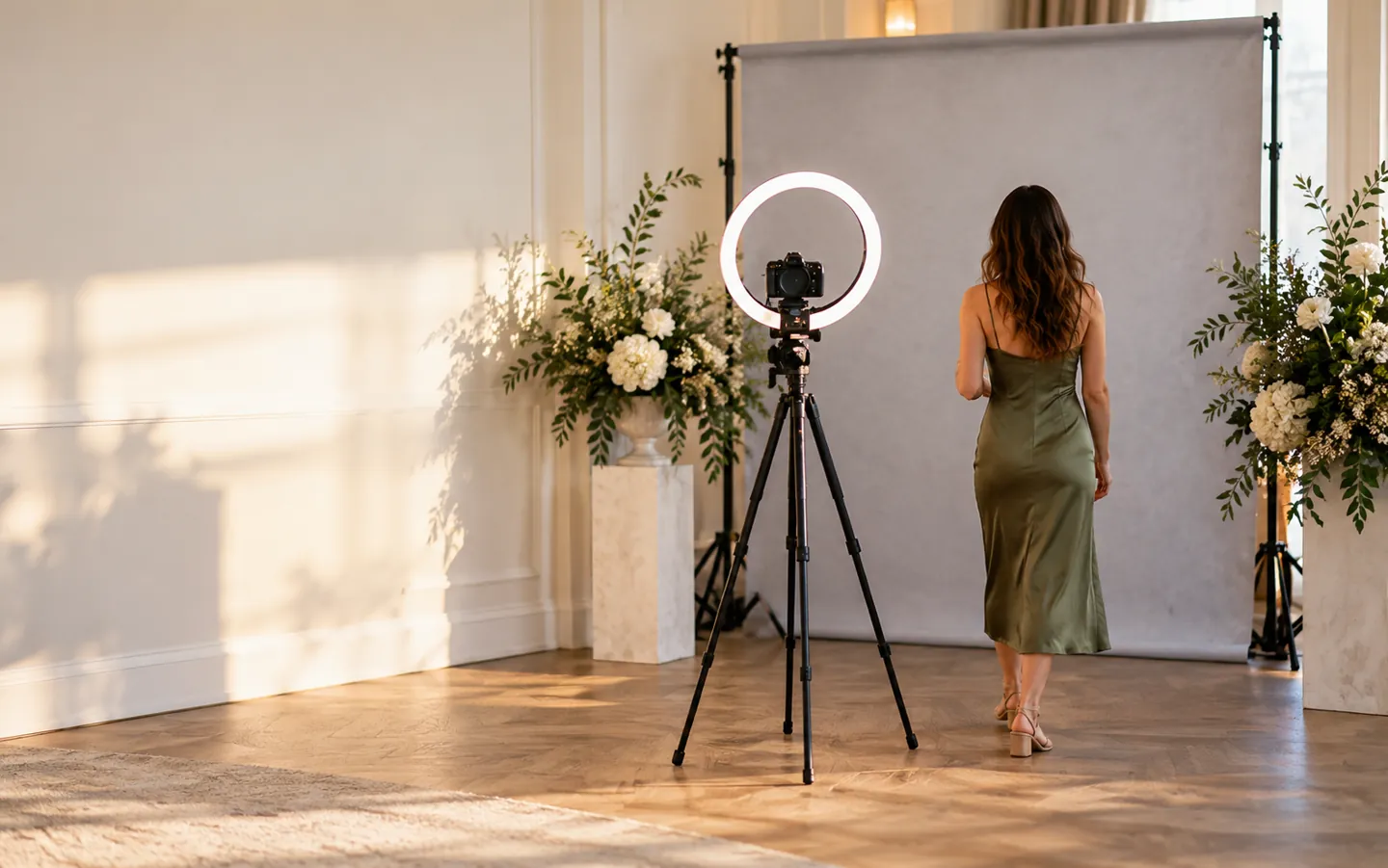
AI-generated image, not a photograph of a real person or place.AI-generated image, not a photograph of a real person or place.
WHERE IT CAME FROM
From a genie to the party booth.
A scene of a genie escaping from a bottle in The Thief of Bagdad (1940), credited to Larry Butler, was the first use of a proper bluescreen process for a travelling matte. In the early 1970s, US and British television began using green backdrops instead of blue.
The digital alpha channel was introduced by Alvy Ray Smith and Ed Catmull in the late 1970s, and a 1984 paper by Thomas Porter and Tom Duff set out how to combine layers with it. AI matting still produces that same kind of per-pixel matte.
Questions
Questions people ask
Why are green screens green?
Green and blue differ most in hue from human skin. Television moved from blue to green partly because presenters often wore blue, and green clothing is less common.
How can a booth remove a background without a screen?
A neural network is trained on many cut-out photos and learns to predict an alpha matte from the image itself. Background Matting (2020) took a different route: an extra photo of the empty background.
What is an alpha matte?
A greyscale map with a value for every pixel, from fully background to fully foreground. Values in between let hair and soft edges blend into the new backdrop.
Why does my hair look cut off?
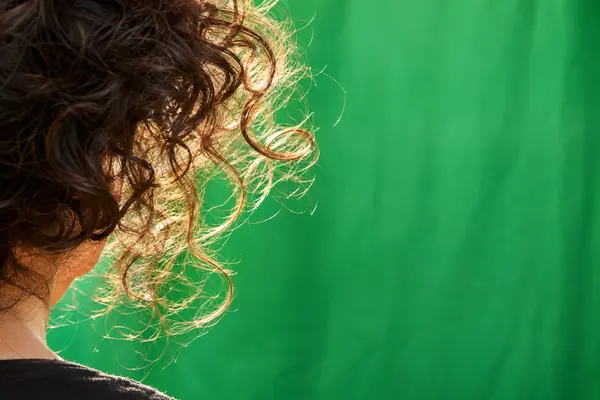
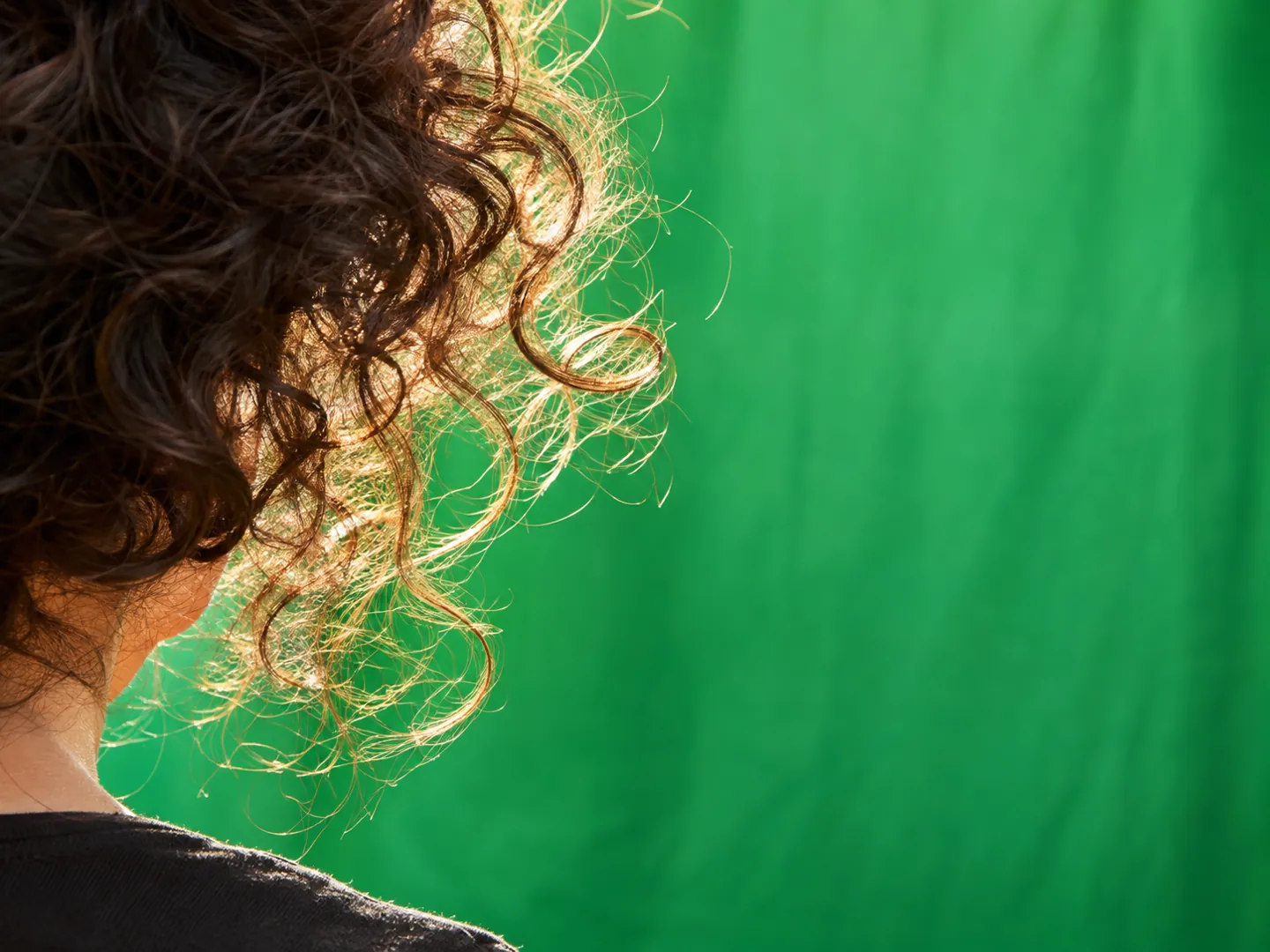
Fine strands let the background show through, so edge pixels are a mix of you and the room. Chroma key sources note that frizzy hair may not resolve properly, and matting research focuses on these edges.
What is a difference matte?
A colour key that uses any still background: the empty scene is captured first and then subtracted. Objects that resemble the background can be removed by mistake, and camera noise can leave patches.